

For any fitness club owner, planning the cardio floor is a delicate balance of spatial efficiency, budget allocation, and member satisfaction. Walk into any high-traffic health club, and you will see two machines constantly occupied: the Commercial Treadmills and the Cross Trainer Machine.
While both serve as foundational cardio units, they cater to distinctly different member demographics, biomechanical needs, and recovery goals. Sourcing the right balance of commercial gym equipment ensures your gym floor handles peak-hour foot traffic without long wait times, keeping member retention rates high.
If you are expanding your commercial facility or sourcing gym equipment in India through wholesale bulk packages, here is how to evaluate the treadmill versus cross trainer dilemma—and how to curate the perfect machine layout for maximum ROI.
1. Comparing the Core Biomechanics & Member Impact
Understanding how your members interact with these cardio machines determines how many of each unit your floor needs:
Commercial Treadmills: High Impact, High Calorie Burn
Treadmills remain the undisputed king of cardiovascular conditioning. They simulate natural human gait mechanics, making them intuitive for every user segment—from walking seniors to sprinting athletes.
-
Biomechanical Profile: Weight-bearing exercise that stresses bones, joints, and connective tissue, promoting bone density and high caloric expenditure.
-
Target Audience: Runners, marathon trainees, HIIT enthusiasts, and general fat-loss clients.
-
Floor Durability Requirement: High impact requires heavy-duty steel frames, commercial AC motors, and thick shock-absorbing decks to withstand constant daily pounding.
Cross Trainer Machines: Low Impact, Full-Body Conditioning
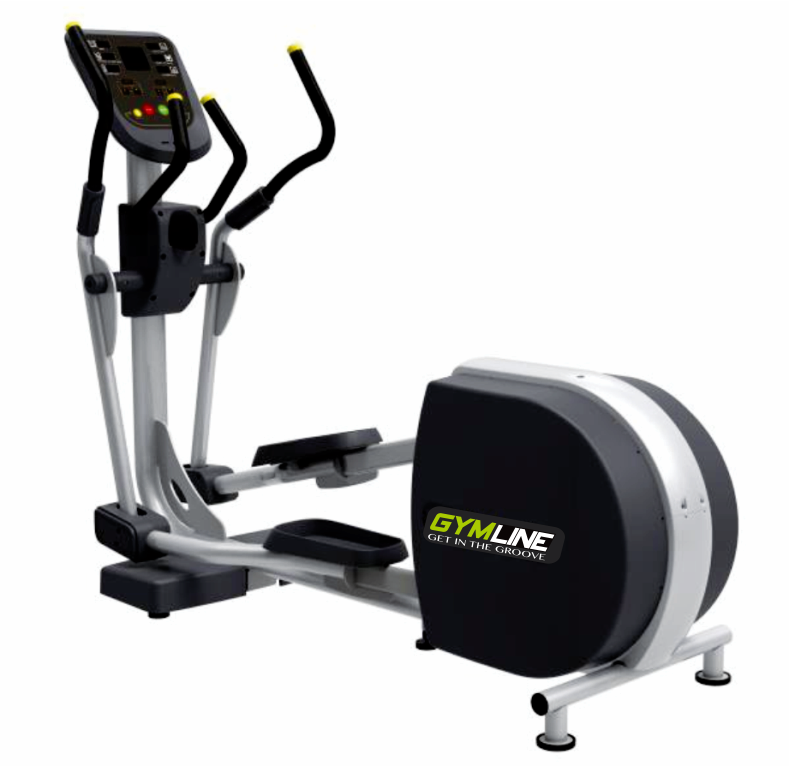
The cross trainer (elliptical trainer) provides closed-chain kinetic movement, meaning the foot never leaves the pedal. This eliminates joint impact entirely while engaging the upper body through synchronized handlebars.
-
Biomechanical Profile: Zero-impact, full-body compound movement. Engages glutes, hamstrings, quads, chest, shoulders, and triceps simultaneously.
-
Target Audience: Members recovering from injuries, seniors, overweight individuals seeking joint-friendly cardio, and active recovery trainees.
-
Floor Durability Requirement: Requires continuous magnetic resistance flywheels, heavy-duty pedal linkages, and smooth bearing pivots for continuous operation.
2. Analyzing Equipment Costs & Maintenance Profiles
When purchasing commercial gym equipment in bulk, long-term operational costs must be factored alongside the initial unit price:
-
Commercial Treadmills: Higher motor and belt usage requires routine lubrication, deck flips, and periodic belt tensioning.
-
Cross Trainers: The lower cross trainer machine price in India paired with low-maintenance magnetic drive systems makes ellipticals one of the most cost-effective cardio investments per square foot.
3. High-Performance Cardio Recommendations from Gymline Plus
To build a world-class facility, sourcing machinery from recognized industry suppliers guarantees smooth performance, long structural warranties, and accessible replacement parts.
At Gymline Plus, we stock top-tier cardio options engineered for rigorous commercial environments:
4. How Sourcing Wholesale Drives Gym Profitability
Buying single cardio units from retail vendors rapidly inflates your capital expenditure. Sourcing directly through established gym equipment wholesale supplies allows you to access:
-
Tiered Bulk Discounts: Drastically reduce unit costs by bundling commercial treadmills, cross trainers, spin bikes, and strength machines into unified floor packages.
-
Unified Warranty & Servicing: Single-point service contracts for your entire floor, ensuring minimal machine downtime and rapid spare part replacement.
-
Expert Floor Layout Planning: Optimizing spatial density to prevent overcrowding while maintaining safe walkway clearance between cardio rows.
(FAQs)
Should a commercial gym have more treadmills or cross trainers?
A standard commercial cardio floor ratio is typically 60% treadmills and 40% cross trainers or secondary cardio machines. Treadmills experience higher continuous usage during peak gym hours, but cross trainers are essential for members seeking low-impact workouts.
What is the average cross trainer machine price in India for commercial use?
Commercial-grade cross trainers with heavy flywheels, self-powered electromagnetic generators, and structural frames typically range from ₹1,200,000 to ₹1,80,000 depending on drive specifications and integrated features.
Are non-motorized curved treadmills better than traditional electric treadmills?
Curved treadmills rely entirely on user momentum, forcing up to 30% higher caloric burn while teaching natural stride mechanics. They require zero electricity and minimal motor maintenance, making them an excellent addition alongside traditional AC-motor treadmills.
Can Gymline Plus assist with complete gym setup packages?
Yes! Gymline Plus provides end-to-end commercial gym setup consultation, offering factory-direct bulk pricing, top global fitness brands, custom machinery selection, and nationwide installation.
Upgrade Your Gym Floor with Gymline Plus
Equipping your gym with the right balance of treadmills and cross trainers creates a dynamic, inclusive environment that keeps members engaged and coming back. High-performance, durable machinery reduces long-term repair costs while projecting a professional image that justifies premium membership pricing.
Don't compromise on your commercial setup. Partner with one of India's trusted suppliers for high-quality commercial treadmills, cross trainers, strength machines, and functional accessories.



